If you run a local company here, you already know digital marketing las vegas is noisy, expensive, and full of bad advice. One person says "just run ads." Another says "SEO is enough." A third tells you to post daily on every social platform. Meanwhile, your phone is not ringing the way it should.
This guide is the practical version. No theory dump. No agency fluff. Just what actually works for local businesses in Las Vegas and Henderson when you care about real leads, booked jobs, and revenue.

Why Las Vegas marketing behaves differently
Most cities have one main audience. Las Vegas has two overlapping audiences all year: locals and visitors.
If you are a med spa, law firm, contractor, dentist, or home service company, tourist traffic can inflate impressions while lowering lead quality. You see "growth" in reports and still miss payroll stress because those clicks were never your buyers.
Las Vegas also has sharp demand spikes:
- HVAC and roofing surge in extreme heat
- legal queries jump around holiday weekends
- event-heavy weeks change search behavior fast
So your strategy cannot be static. It has to be responsive, local, and measured by lead quality, not vanity volume.
Channel roles: what each channel should do
Most small businesses fail because they treat every channel like it has the same job.
Use this split instead:
- Paid search captures urgent intent now
- Local SEO compounds lower-cost lead flow over time
- Website conversion work turns visits into calls/forms
- Retargeting follows up with people who did not convert yet
- Email/SMS handles nurture and reactivation
When you force one channel to do everything, it gets expensive fast.
Start with unit economics before tactics
Before you touch ads or content, answer these four numbers:
- What is a qualified lead worth?
- What percent of qualified leads close?
- What is average job value or LTV?
- How quickly do you respond to new leads?
If you do not know these, you cannot set budget confidently.
Simple example:
- Average job value: $2,400
- Gross margin: 45%
- Close rate on qualified leads: 32%
That tells you roughly what you can pay per qualified lead and still grow safely.
Without this, owners either underinvest and stall or overspend and panic.
Budget bands that make sense in 2026
For most local businesses, these ranges are practical:
$2,500 to $4,000 per month
Best for newer operators or tight-cash businesses.
- Local SEO foundation
- Google Business Profile execution
- Small paid search campaign on highest intent terms
- Basic conversion-focused web design
Goal: predictable lead baseline, not market domination.
$4,000 to $8,000 per month
Best for businesses wanting consistent growth.
- Expanded paid search clusters
- stronger local SEO content velocity
- call tracking and source attribution cleanup
- conversion testing on top landing pages
Goal: stable pipeline and reduced cost per qualified lead.
$8,000 to $20,000+ per month
Best for multi-location teams or high-ticket categories.
- neighborhood-level campaign segmentation
- dedicated landing pages by service and city area
- branded + non-branded demand capture
- structured retargeting and nurture flows
- serious CRO cadence
Goal: defend share, scale, and improve profit per lead channel.

Paid search: the fastest demand capture
If someone searches "emergency plumber henderson" or "car accident lawyer las vegas" that is commercial intent right now.
Paid search works when you keep it brutally focused.
Do this:
- Build ad groups around specific service intent
- use exact and phrase match for core terms
- maintain aggressive negative keyword lists
- send traffic to the exact matching service page
- track calls and forms as separate conversions
Do not do this:
- send all paid clicks to homepage
- bid broad city terms with no filter
- optimize for cheap clicks instead of qualified leads
- ignore after-hours call handling
In Las Vegas, response speed is part of marketing. If your team replies in 20 minutes and competitors reply in 3 minutes, you lose even with better campaigns.
Local SEO: compounding lead engine
Paid ads stop when spend stops. Local SEO keeps working.
Strong local SEO in this market requires:
- clean technical foundation
- structured service + location content
- consistent citations
- active review generation
- internal links that match search intent
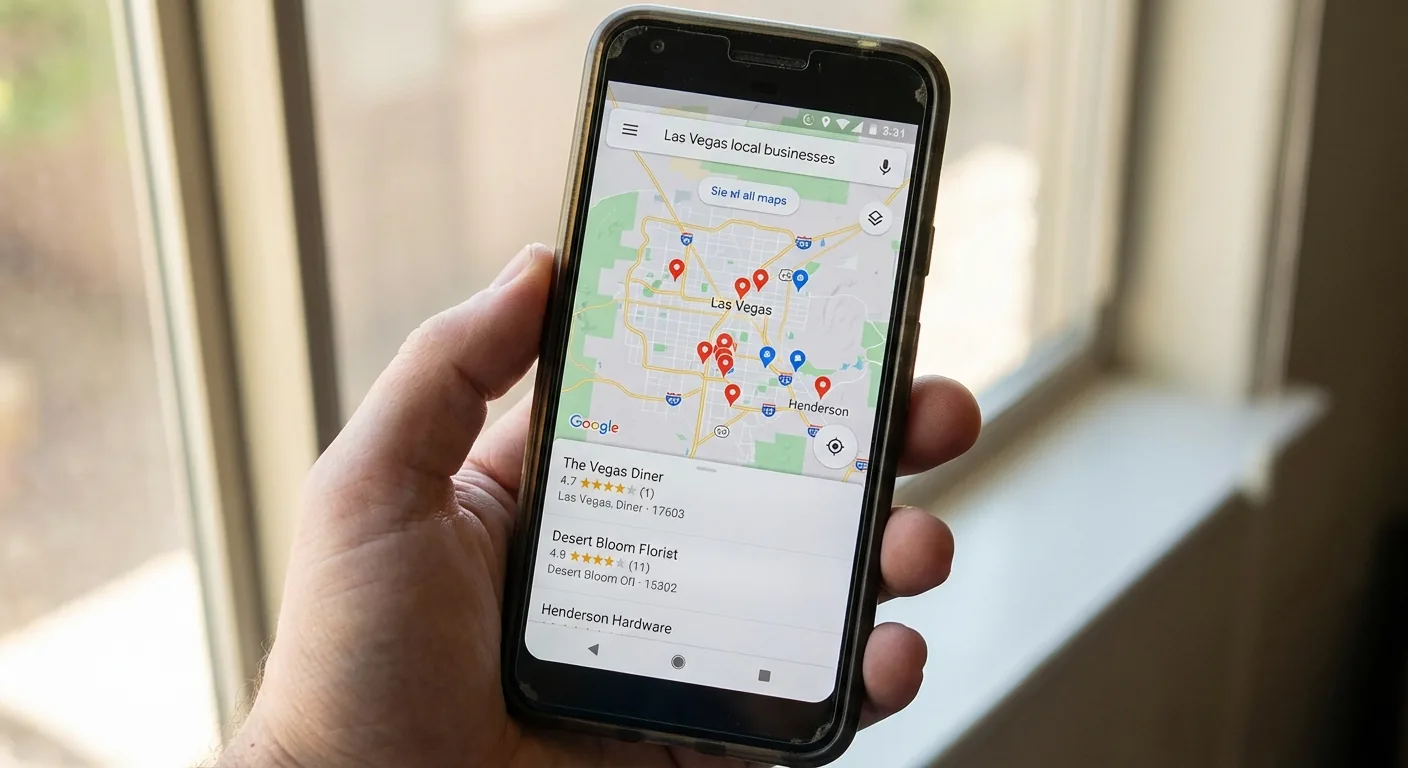
Your Google Business Profile is central. Keep photos current. Post updates. Respond to reviews quickly. Make categories precise.
If you need a baseline, start with an SEO audit for Las Vegas businesses and fix technical drag first.
Website conversion: where most money is lost
Most local sites are pretty and underperforming.
Common failure points:
- weak headline above the fold
- no clear offer or next step
- too many choices in navigation
- buried phone number
- slow mobile load
- forms asking for too much too early
Fixes that usually help immediately:
- one primary CTA per page
- click-to-call sticky button on mobile
- trust section near form (reviews, certifications, real team photos)
- short form for initial contact
- fast thank-you follow-up workflow
Your website is not a brochure. It is a conversion system.
Content strategy that drives qualified traffic
You do not need 50 random blog posts. You need content tied to buying intent.
Build clusters like this:
- Core service page: "AC repair Las Vegas"
- City variant: "AC repair Henderson"
- problem page: "AC blowing warm air in 110 degree heat"
- comparison page: repair vs replacement
- cost page with transparent ranges
This structure lets you rank for both immediate and research intent.
Internal linking matters. Guide users to the next action with context, like local SEO strategy or digital marketing services.
Social media: support channel, not primary channel for most
Social can help, but most service businesses in the valley overestimate it.
Use social for:
- credibility proof
- remarketing audiences
- offer reinforcement
- local awareness around promotions/events
Do not expect Instagram reels alone to replace intent capture from Google.
If your pipeline is weak, fix search + conversion first.
Tracking stack you actually need
You do not need enterprise analytics bloat. You need clean attribution.
Minimum stack:
- GA4 configured correctly
- call tracking with source labels
- form tracking by landing page
- CRM status stages for lead quality
- weekly report showing qualified leads by source
Critical rule: marketing and sales must define "qualified" together.
If marketing says a lead is great and sales says it is junk, your reporting is fiction.
Offer strategy: stop selling generic "contact us"
Most sites ask for a commitment too early.
Use offers that match intent stage:
- high intent: "Book same-day estimate"
- medium intent: "Get pricing range in 24 hours"
- low intent: "Get the 5-minute local strategy review"
In Las Vegas, trust and speed close deals. Your offer should reduce friction, not increase it.
90-day execution plan
Here is a realistic sequence.
Days 1 to 30: foundation
- fix tracking and attribution
- tighten paid search scope
- improve top two service landing pages
- optimize Google Business Profile
- launch review request process
Days 31 to 60: expansion
- add service + neighborhood pages
- launch retargeting audiences
- implement lead response SLAs
- test offer and CTA variations
Days 61 to 90: compounding
- scale winning keyword groups
- pause weak campaigns aggressively
- publish high-intent supporting content
- improve call handling scripts
- formalize weekly optimization rhythm
At day 90, you should have clearer unit economics and better lead consistency.
Red flags when hiring marketing help
If you are evaluating partners, watch for these:
- no discussion of close rates or lead quality
- reporting focused on impressions/clicks only
- long lock-in contract before proving baseline gains
- one-size-fits-all package with no local segmentation
- no ownership of conversion rate improvements
Good partners ask hard business questions. Bad partners avoid them.
What to do this week
If you want momentum now, do these five steps this week:
- Audit your current lead sources by quality.
- Pause any campaign that cannot show qualified lead output.
- Fix your top landing page headline + CTA.
- tighten your Google Business Profile categories and photos.
- set lead response target to under 5 minutes during business hours.
None of this is glamorous. All of it works.
KPI dashboard that prevents bad decisions
Most owners only see spend and lead count. That is not enough to run a healthy engine.
Track these weekly:
- qualified leads by channel
- booked appointments by channel
- close rate by channel
- revenue per booked appointment
- cost per qualified lead
- speed-to-first-response
When these metrics are visible, you can scale confidently. Without them, you overreact to noisy weeks.
For digital marketing las vegas campaigns, this dashboard is the difference between controlled growth and random spending.
Team workflow: marketing and sales must stay connected
Another leak happens after the lead comes in.
If marketing sends leads and sales does not return status quickly, campaign optimization slows to a crawl.
Use a simple loop:
- marketing tags source and landing page
- sales marks lead quality and outcome
- weekly review adjusts spend and messaging
No complex software required. Just discipline.
Seasonal planning for Las Vegas demand swings
Do not wait for peak season to prepare.
Plan 60 to 90 days ahead:
- pre-summer: HVAC and roofing readiness pages, ad prep, staffing
- pre-holiday: legal and hospitality demand coverage
- event-heavy periods: temporary budget and landing page adjustments
When seasonality is planned, digital marketing las vegas performance becomes more predictable and less stressful.
Practical split for owner time each month
Owners ask how much time this requires if a team is helping.
A practical monthly commitment:
- 60 minutes: KPI review
- 45 minutes: offer and sales feedback review
- 30 minutes: campaign priority decisions
- 30 minutes: website conversion update approvals
That small cadence keeps strategy tied to business reality.
Final take
The winning version of digital marketing las vegas is disciplined, local, and numbers-driven. It is not about being everywhere. It is about owning the moments where local buyers are ready to act.
Run paid search for immediate demand. Build local SEO for compounding returns. Fix conversion leaks on your site. Track qualified leads honestly. Adjust weekly.
That is the playbook.
Ready to stop guessing? Book a free strategy call with VegasOps.