If you are searching how to get more google reviews, you probably already know the obvious truth: in Las Vegas, buyers compare businesses fast and reviews often decide who gets the call. Not your logo. Not your tagline. Not your “about us” story. Your review profile.
Most owners still run review collection like an afterthought. They ask randomly, hope for the best, and then wonder why competitors with similar service quality have 4x more social proof.
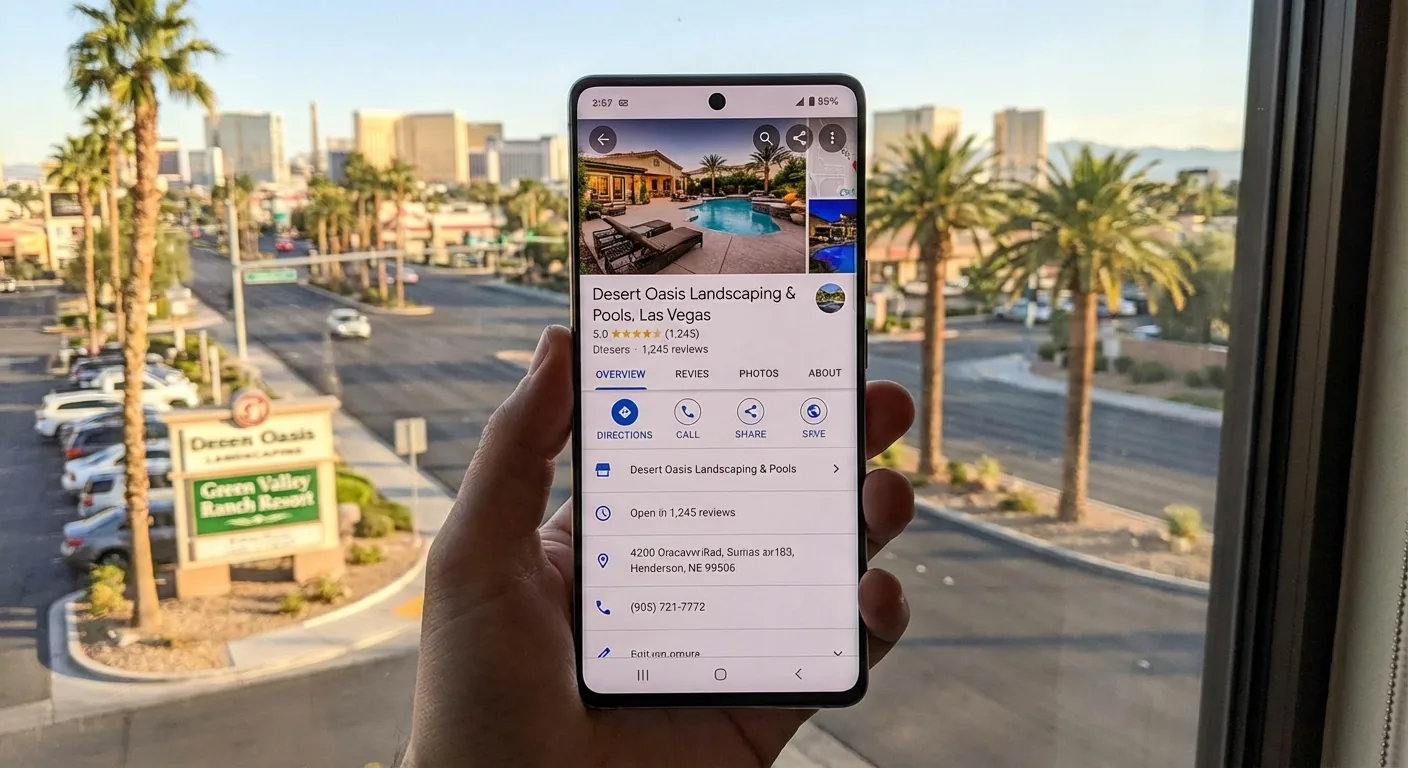
Here is the system that actually works for local businesses in Las Vegas and Henderson without begging, nagging, or crossing policy lines.
Why reviews matter more than people admit
Reviews are not just reputation. They influence three critical levers:
- map pack trust and click-through behavior
- conversion confidence before first contact
- local relevance signals inside Google Business Profile
In practical terms, more high-quality recent reviews usually means:
- more map listing clicks
- more calls from high-intent searchers
- better close rates because trust is preloaded
That is why “we do great work, word of mouth is enough” stops scaling once competitors build better digital trust signals.
The biggest myths that hold owners back
Myth 1: “Great service automatically creates reviews”
No. Great service creates the opportunity. A system creates the review.
Myth 2: “Asking feels awkward”
Only if you ask late, vaguely, or in the wrong channel. When asked at the right moment with clear context, customers are usually happy to help.
Myth 3: “We should only ask happy customers”
You should ask broadly after completed work and then improve service from real feedback. Manipulative review gating can cause compliance issues and hurts long-term trust.
Myth 4: “One big review campaign solves it”
Review growth is not a campaign. It is an operating habit.
The review engine: a simple 5-step system
Step 1) Define your ask moment
Pick one reliable moment when customer satisfaction is highest:
- right after job completion
- after successful delivery/installation
- after a positive follow-up check-in
Do not wait a week. The request should happen when value is freshest.
Step 2) Use one direct review link
Make the action frictionless. Your team should use the same short link every time:
- SMS after completed service
- email follow-up with one clear CTA
- printed card with QR for in-person handoff
If you make customers search for your profile manually, conversion drops.
Step 3) Train staff on exact wording
Most teams fail here because every person improvises. Give them one script:
“Thanks again for choosing us. If today’s service helped, would you mind sharing a quick Google review? It really helps local families find us.”
That is natural, local, and low pressure.
Step 4) Add one polite reminder
No response in 24-48 hours? Send one follow-up. Just one. Keep it short and respectful.
Step 5) Respond to every review quickly
Replying builds trust for future buyers and signals active business management.
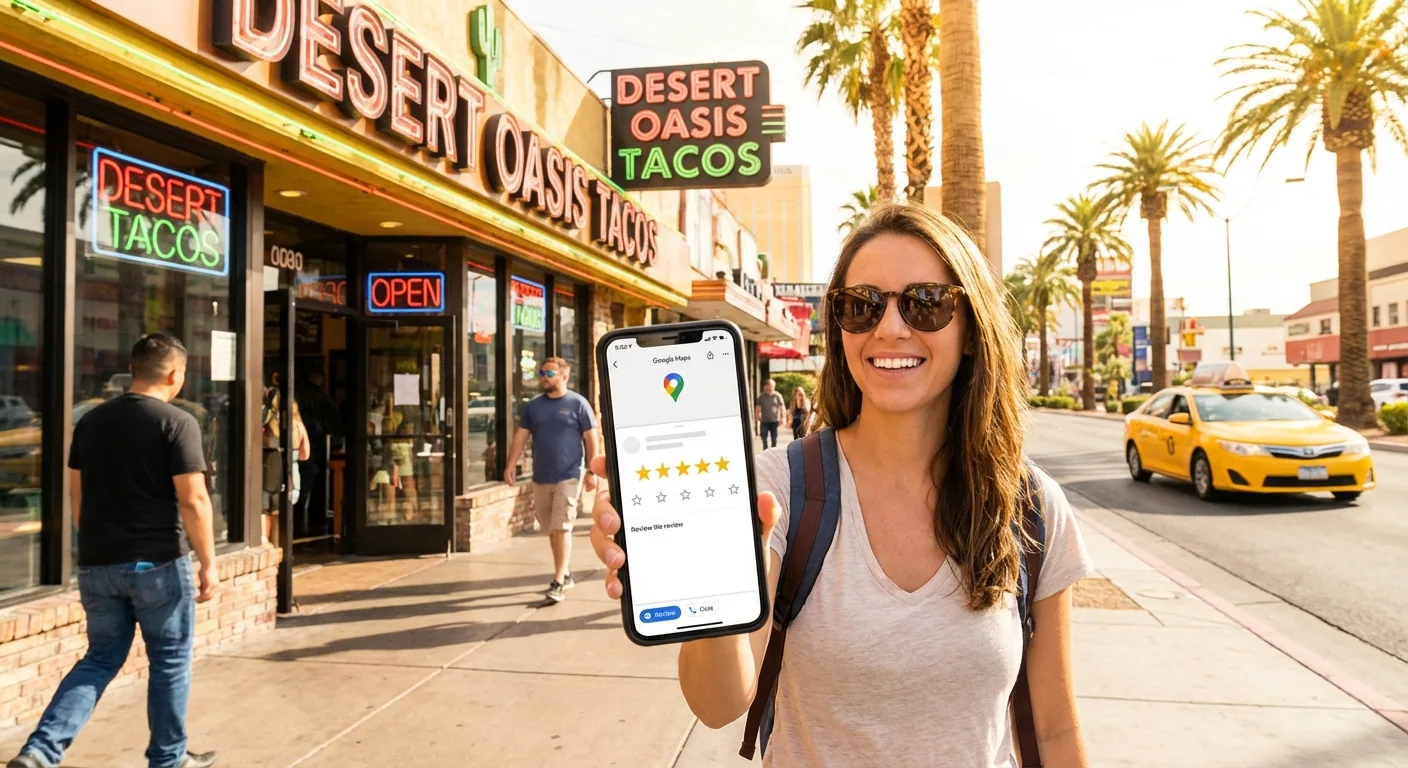
How to get more google reviews without sounding desperate
Use context, not pressure.
Bad ask:
- “Please leave us a 5-star review!”
- “Can you help us out?”
Better ask:
- “If our team made this easy for you, would you share your experience on Google?”
- “Would you mind mentioning the service we completed? That helps people in Henderson know what to expect.”
Notice the difference. You are inviting honest feedback, not begging for stars.
Team workflows that sustain review growth
If owners have to remember every ask manually, consistency dies. Build workflow.
Minimum operational setup:
- CRM trigger when job status changes to completed
- automatic SMS/email request within 30-90 minutes
- one reminder sequence after 48 hours
- weekly dashboard: requests sent, reviews received, response time
This can be lightweight. What matters is reliable execution.
What to avoid (important)
Do not do the following:
- buy fake reviews
- offer prohibited incentives for specific ratings
- use review gating forms that hide unhappy feedback
- blast customers with multiple reminders
- copy/paste identical public responses
Short-term shortcuts can damage profile health and long-term credibility.
Response templates that build trust
Responding is part of the growth loop. Keep tone human and local.
Positive review response:
“Thank you for the kind words, [Name]. Glad our team could help with your [service]. We appreciate you trusting us and our Las Vegas crew.”
Critical review response:
“Thanks for sharing this, [Name]. We are sorry your experience was not what it should have been. We’d like to make this right. Please contact us directly at [phone] so we can resolve it quickly.”
Never argue publicly. Future customers are watching.
How reviews connect to rankings and lead quality
Reviews are a growth multiplier when tied to local SEO strategy. They reinforce map performance, increase click confidence, and often improve lead intent quality because prospects arrive with stronger trust.
Strong review profiles also make paid traffic perform better. When users click from ads, they often validate reputation before contacting you.
Las Vegas/Henderson-specific playbook
Use local context in your review strategy:
- ask customers to mention neighborhoods naturally (Summerlin, Henderson, North Las Vegas)
- encourage service-specific detail (“same-day AC repair,” “emergency plumbing,” etc.)
- respond with local professionalism and clear accountability
This improves relevance and helps prospects self-qualify faster.
Weekly review KPIs you should track
Track these every week:
- total review requests sent
- review conversion rate
- average rating trend
- review recency
- response time to new reviews
Keep this in one sheet or dashboard. If you do not measure it, it drifts.
Common reasons review systems stall
Most plateaus come from one of these:
- front desk/team not trained on when to ask
- links are inconsistent or broken
- follow-up timing is too late
- owner responds to reviews irregularly
- no one owns the process
Assign clear ownership and revisit scripts monthly.
The 30-day rollout plan
Week 1:
- finalize scripts + channels
- generate direct review link
- train team
Week 2:
- launch request automation
- begin response SLA for all new reviews
Week 3:
- audit conversion rate by channel (SMS vs email)
- optimize message wording
Week 4:
- publish KPI snapshot
- set next-month target and accountability
That is how how to get more google reviews stops being a question and becomes a repeatable operating system.
Ready-to-use request scripts (short and natural)
Use consistent language so your team does not improvise.
SMS:
"Thanks again for choosing us today. If our service helped, would you mind leaving a quick Google review? It helps other Las Vegas customers find us: [link]"
Email:
"We appreciate your business. If your experience was positive, a short Google review would mean a lot. Mentioning the service you received helps people know what to expect: [link]"
In-person:
"If we took good care of you today, we’d really appreciate a Google review. It helps local families in Henderson and Las Vegas choose confidently."
How to handle negative reviews without damaging trust
Use a simple structure:
- acknowledge the concern respectfully
- apologize for the gap in experience
- offer direct offline resolution
- follow up once resolved
Never argue publicly or copy/paste robotic replies. Prospects judge your professionalism by how you handle criticism.
60-day implementation roadmap
Days 1-14:
- finalize scripts + automation
- train front-line team
- set response SLA
Days 15-30:
- measure request conversion by channel
- refine timing and wording
- fix broken links or workflow gaps
Days 31-60:
- review KPI trends
- improve weak-performing segments
- align review strategy with local SEO goals
Consistency over 60 days beats any one-time “review push.”
Frequently overlooked process details
Small process decisions have outsized impact:
- ask timing by service type (same day vs next day)
- owner visibility in responses for high-sensitivity cases
- monthly script refresh based on customer language
- simple internal leaderboard for request consistency
Treat review operations like quality control, not a side task.
Internal accountability model that keeps momentum
Assign explicit ownership:
- one person owns request automation
- one person owns response SLA
- one person owns weekly KPI reporting
When ownership is shared vaguely, performance declines quietly.
Escalation rules for review issues
Define escalation thresholds so your team reacts quickly:
- legal/compliance complaints
- safety-related concerns
- repeated service-quality patterns
Escalate these to leadership immediately and document resolution steps. Clear escalation improves public trust and internal accountability.
Monthly reset checklist
At month end, review:
- ask-rate by team member
- review conversion by channel
- response time compliance
- recurring complaint themes
Then set one operational improvement for the next month.
Small monthly refinements compound faster than sporadic big pushes.
Consistency builds credibility with both customers and Google over time.
Final take
In Las Vegas, reviews are not vanity. They are market infrastructure.
If you want more calls and better local rankings, build a clean, consistent review workflow and run it like any other revenue process. Ask at the right moment, make it easy, respond fast, and keep standards high.
If you want help connecting reviews to Las Vegas SEO services and conversion performance, build it as one system instead of isolated tactics.
Ready to stop guessing? Book a free strategy call with VegasOps.