Las Vegas Hotel Marketing: Industry Benchmarks & Analysis
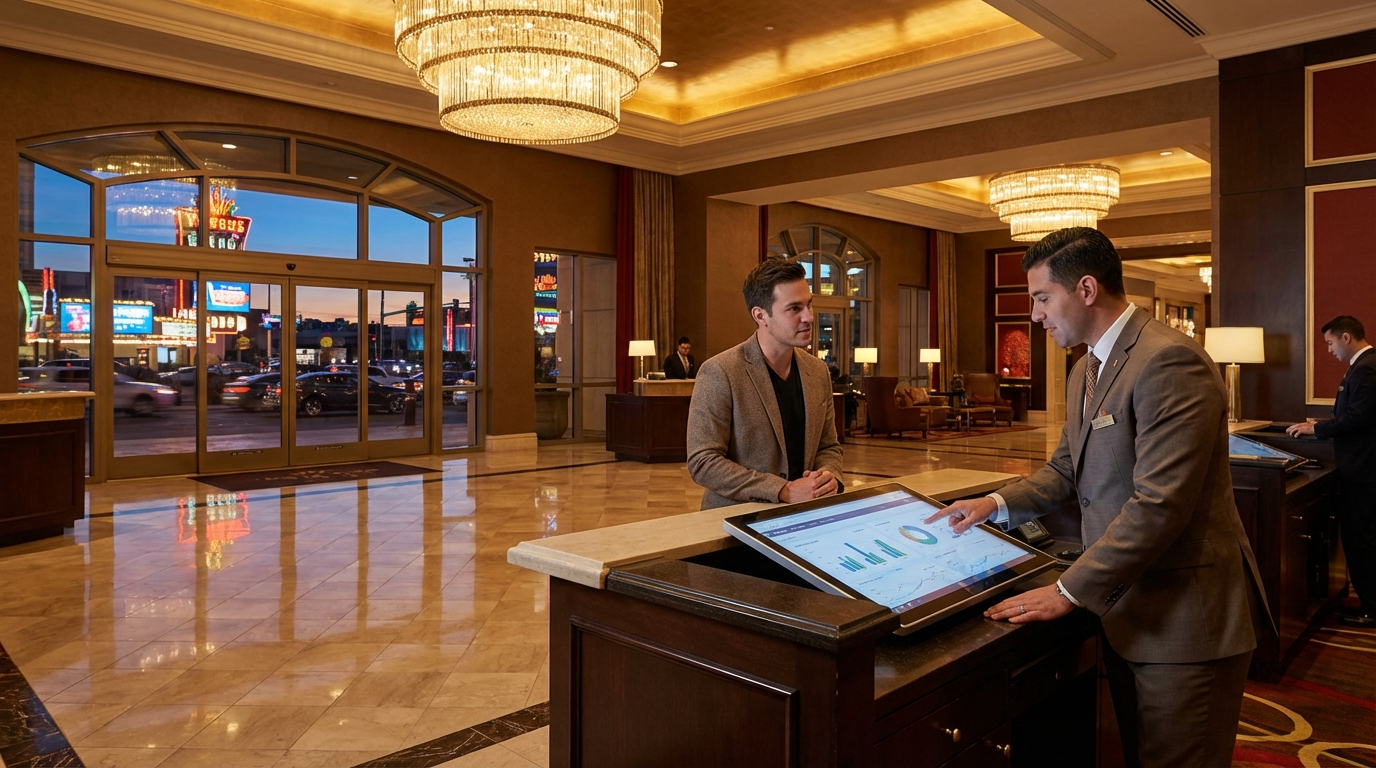
The Las Vegas hotel market is unlike any other in the world. With over 150,000 hotel rooms across the metro area, including 65,000+ on the Strip alone, it is the most concentrated and competitive hospitality market in the United States. Total visitor volume reached 40.8 million in 2023, generating $35.7 billion in direct economic impact. Yet despite this massive scale, the digital marketing landscape for Las Vegas hotels remains surprisingly inefficient. Most properties are overspending on broad keywords, underinvesting in organic search, and leaving significant revenue on the table by failing to address event-driven demand cycles. This page provides an industry-level analysis of hotel digital marketing in Las Vegas: what hotels are spending, where they are spending it, what is working, and where the gaps are. Whether you are a revenue manager evaluating your marketing budget, a GM comparing your performance to competitors, or an owner deciding whether to invest more in digital channels, the benchmarks and data here will help you make informed decisions. These numbers are drawn from our work with Las Vegas hospitality clients and corroborated against industry reports from STR, Phocuswright, and Google's own hotel advertising data.
The Las Vegas Hotel Marketing Landscape: Key Challenges
65,000+ Strip Rooms Create Extreme Keyword Competition
The sheer density of hotels on the Las Vegas Strip means that broad terms like 'Las Vegas hotel' have CPCs exceeding $12 and organic SERPs dominated by OTAs and mega-resort brands. Independent properties need to find keyword territory that the giants are not defending.
Event-Driven Demand Cycles Create Feast-or-Famine Marketing
CES adds 170,000 attendees in January. The F1 Grand Prix fills 300,000+ hotel nights in November. Between major events, occupancy can drop 20-30 points. Hotels that do not adjust their marketing spend and messaging in real time for these cycles are either overspending during peaks or invisible during valleys.
International Visitor Marketing Requires Multilingual Strategy
International visitors account for roughly 19% of Las Vegas arrivals, with significant volume from Mexico, Canada, the UK, China, and South Korea. Hotels targeting these segments need multilingual landing pages, geo-targeted ads, and content optimized for non-English search engines and travel platforms.
Review Management at Scale Is a Competitive Differentiator
A large Las Vegas hotel receives 50-200 new reviews per month across Google, TripAdvisor, Yelp, and Booking.com. Properties that respond to 90%+ of reviews within 24 hours see measurably higher click-through rates and booking conversion compared to those that respond sporadically.
OTA Market Share Is Growing, Not Shrinking
Despite industry rhetoric about direct bookings, OTAs captured 41% of US hotel bookings in 2024, up from 37% in 2019. In Las Vegas, where comparison shopping is endemic, the OTA share for independent hotels can exceed 70%. The competitive landscape is getting harder, not easier.
Our Process
Average CPC by Keyword Category
Broad terms ('Las Vegas hotel'): $10-$15 CPC. Landmark-specific ('hotel near LVCC'): $4-$8. Event-specific ('CES hotel 2027'): $6-$12, spiking to $18+ in the 30 days before the event. Brand terms ('[your hotel name]'): $0.50-$2.00. Long-tail ('pet-friendly hotel with pool downtown Las Vegas'): $2-$5. The cost-effective play for most independent hotels is dominating the landmark and long-tail categories.
Conversion Rates by Channel
Direct website (organic traffic): 2.5-4.5% booking conversion. Direct website (paid search): 3-6% for well-optimized campaigns. Metasearch (Google Hotel Ads, TripAdvisor): 1.5-3%. Email marketing to past guests: 1.8-3.2% click-to-book. Social media referral: 0.3-0.8%. The highest-ROI channel is almost always email to past guests, followed by branded paid search.
Seasonal Marketing Spend Patterns
January (CES, Consumer Electronics Show): highest ad spend month, budgets increase 40-60% above baseline. March-April (March Madness, spring convention season): second peak. June-August (summer leisure travel): moderate spend with a family and international traveler focus. September-October (lowest demand period): reduced spend, focus on SEO and content. November (F1 Grand Prix): sharp spike in event-targeted spend.
Average Marketing Budget Allocation
For Las Vegas hotels spending $5K-$20K/month on digital marketing, the typical allocation is: 35-40% paid search and metasearch, 20-25% SEO and content, 15-20% social media and creative, 10-15% email and CRM, 5-10% review and reputation management. Hotels skewing too heavily toward paid search (over 50%) typically have weak organic foundations and high customer acquisition costs.
Competitive Density Analysis
The top 10 organic positions for 'Las Vegas hotel' are held exclusively by OTAs and mega-resort brands. For 'boutique hotel Las Vegas,' 4 of 10 positions are attainable by independent properties. For 'hotel near [specific landmark],' independent hotels can realistically rank in the top 3-5 positions with focused SEO effort. The further you move from generic terms, the more competitive space opens up.
Hotel Industry Insights
Common Challenges
- •Lack of reliable benchmarking data makes it impossible for hotel operators to know if their marketing spend is efficient.
- •Over-concentration of ad spend on broad, expensive keywords instead of defensible niche terms.
- •Failure to adjust marketing budgets and strategy for Las Vegas's unique event-driven demand calendar.
- •Underinvestment in organic search and content, creating permanent dependency on paid channels.
- •Treating all guest segments with the same marketing message instead of tailoring by traveler type and origin market.
Growth Opportunities
- •Building a proprietary benchmarking dashboard that tracks your hotel's digital performance against local competitors in real time.
- •Capitalizing on the 60%+ of 'hotel near [landmark]' searches that have no strong organic competitor from independent properties.
- •Developing multilingual marketing assets to capture the 19% international visitor segment that most competitors ignore.
- •Using AI-powered dynamic pricing content that adjusts landing page messaging based on current occupancy and demand signals.
Avg. CPC
$2 - $5 for long-tail hotel keywords, $6 - $12 for event-specific, $10 - $15+ for broad competitive terms in Las Vegas.
Conversion Rate
2.5-4.5% for organic direct traffic, 3-6% for paid search, 1.5-3% for metasearch, 1.8-3.2% for email campaigns.
ROI Timeline
Paid search reaches positive ROI in 30-60 days with proper optimization. SEO investments typically break even at 6-8 months and compound thereafter.
All hotel marketing in Nevada must comply with SB 312 regarding transparent resort fee disclosure. FTC drip pricing guidelines require that mandatory fees be included in advertised rates. Failure to comply exposes properties to consumer complaints and enforcement action.
Results That Speak
Market Analysis: How Off-Strip Hotels Are Winning the Landmark SEO Battle
Independent hotels targeting landmark-based keywords achieved 3.2x higher conversion rates at 58% lower CPC compared to properties competing on broad 'Las Vegas hotel' terms.
Across our portfolio of Las Vegas hotel clients, we analyzed 18 months of search data comparing broad keyword strategies to landmark-specific approaches. Properties that built dedicated landing pages for nearby venues, convention centers, and attractions consistently outperformed those spending heavily on generic terms, proving that strategic keyword selection matters more than budget size in this market.
Frequently Asked Questions
What's the average marketing budget for a Las Vegas hotel?
How has AI changed hotel digital marketing?
What marketing channels drive the highest ROI for hotels?
How does Las Vegas hotel marketing differ from other major markets?
Related Services
Hotel Digital Marketing Agency
Partner with a Las Vegas agency that understands the operational complexity of hotel marketing in this market.
Las Vegas SEO Services
Build a powerful organic presence that drives traffic for years to come with our foundational SEO services.
Google Ads Management Las Vegas
Capture immediate booking demand for specific dates or events with targeted PPC campaigns.
Las Vegas Web Design
Ensure your website and booking engine are fast, mobile-friendly, and optimized to convert lookers into bookers.

Alan Singh
Founder & AI Marketing Strategist
Alan Singh is the founder of VegasOps, an AI-powered digital marketing agency in Las Vegas. With 10+ years in growth marketing, a Meta Business Partner certification, and hands-on experience building multi-model AI systems (Claude, Gemini, GPT), he helps Las Vegas businesses generate leads through SEO, Google Ads, and web design at scale.
Connect on LinkedInWant to Know Where Your Hotel Stands?
We will benchmark your digital marketing performance against your Las Vegas competitors and show you exactly where the gaps and opportunities are. No fluff, just data.